Most Diwali gifts don't survive Diwali week. The sweets are gone by Chaturthi. The chocolates disappear before the diyas are extinguished. The generic hamper box, however beautifully wrapped, is flattened and kept aside by the time Bhai Dooj arrives. What remains in the room when the festival is over tells you everything about the gift.
Diwali 2026 falls on Sunday, 8 November, with the five-day festival running from Dhanteras on 6 November through to Bhai Dooj on 11 November. The searches for what to give begin weeks before that. And in 2026, what those searches reveal is a clear shift in what people actually want to give and receive.
Not more sweets. Not another hamper. Something made by a human being, with skill that took years to develop, from a tradition that will not survive if no one keeps choosing it. Something that goes on a shelf, on a wall, on a dining table, and stays there.
This guide is for that kind of gift.
What a Diwali Gift Is Actually For
In its oldest expression, Diwali gifting was not about volume or price. It was about auspiciousness. The gift was meant to carry good fortune into the recipient's home, to mark the beginning of the new financial year with a gesture of goodwill and care.
That meaning has largely been obscured by the generic hamper. A tin of cashews and a scented candle in festive packaging is pleasant. It is not auspicious. It carries no story, no craft, no specific intention beyond the transaction that produced it.
A handcrafted gift is different in the way that matters. Someone made it, by hand, in a tradition that has existed in India for centuries. The Chitrakar who painted the Pattachitra. The Dhokra artisan who broke the clay mould after a single casting to reveal the brass inside. The village potter who shaped the terracotta cup on a wheel, fired it, and painted it. These are not anonymous objects. They carry the mark of a specific human skill, applied on a specific day, in a specific place. That quality of being made, not manufactured, is what gives a handcrafted gift its particular weight as a Diwali offering.
For the Home: Gifts That Change a Room
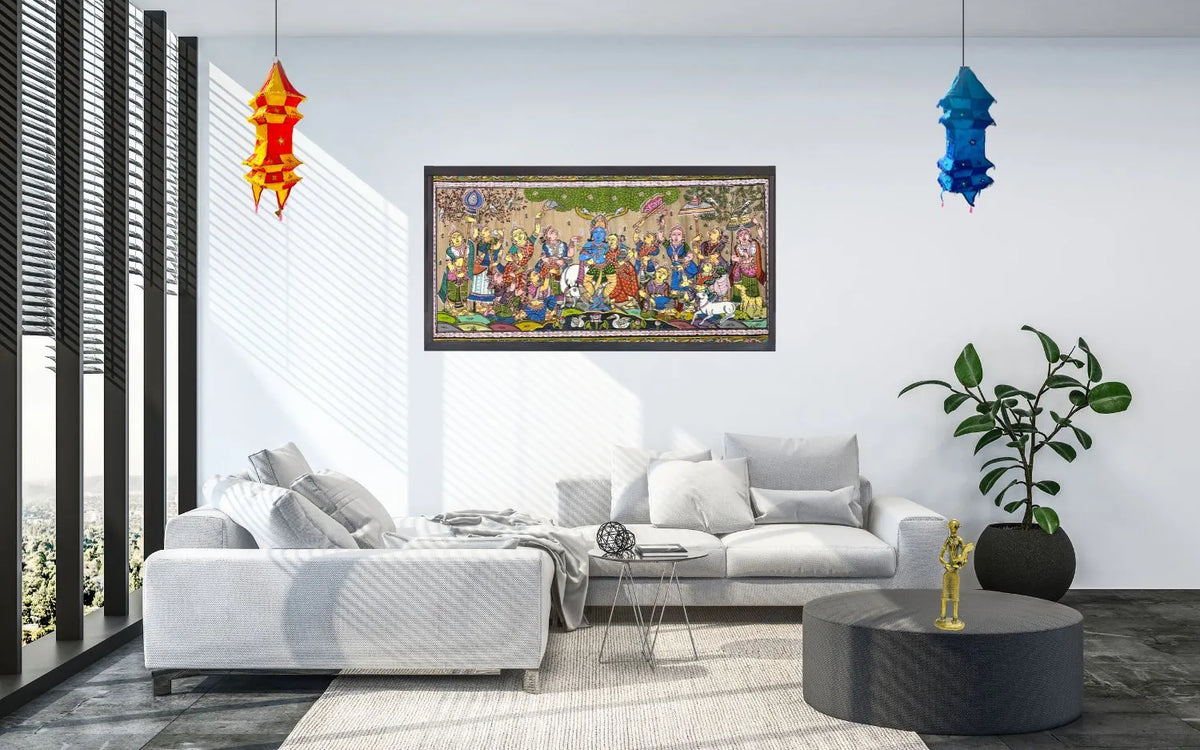
The most lasting Diwali gift is one that goes on a wall or a shelf and becomes part of how a home looks and feels every day thereafter.
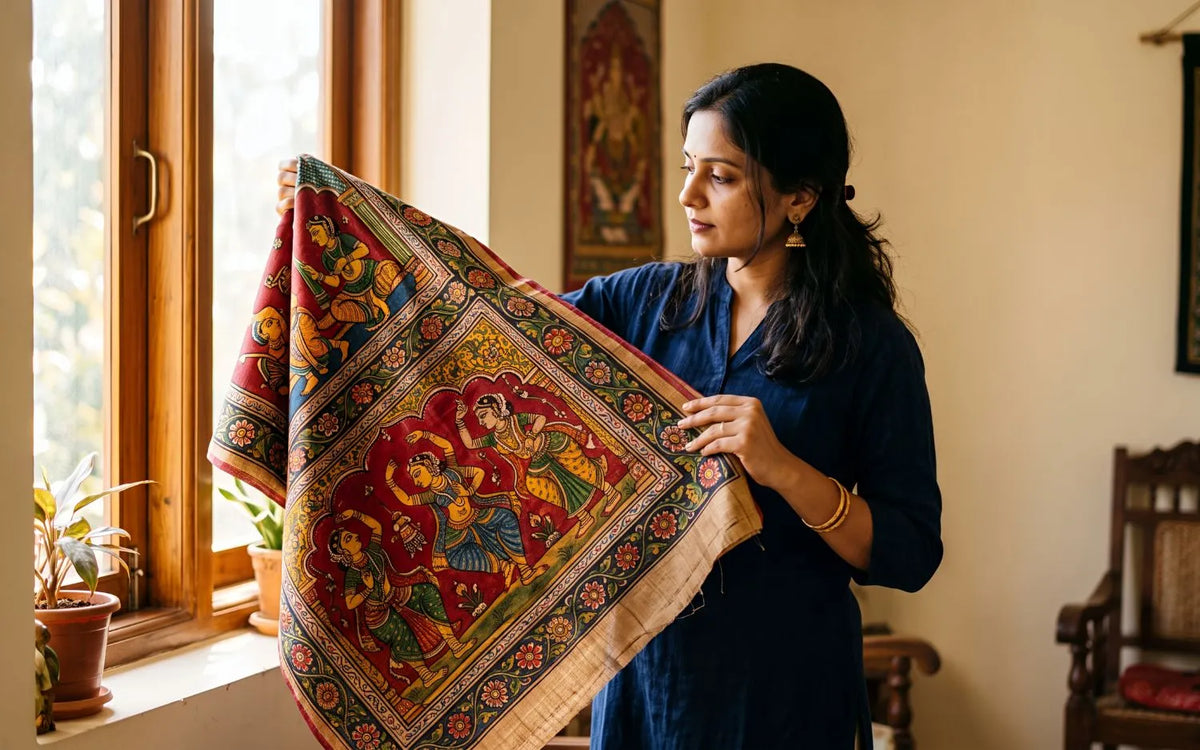
A Pattachitra painting is in this category. Each painting is sourced from Chitrakar artisan families across Odisha, painted using traditional techniques on natural canvas. A devotional composition: Radha-Krishna, the Rath Yatra, Lord Ganesha, on a wall becomes part of a home's daily visual life in a way that a framed print never does. The person who receives it is not just receiving a decorative object. They are receiving a piece of a tradition that has been practised for centuries and is, in the most literal sense, at risk of not surviving the next generation.
Saura and Tribal paintings make a different kind of wall gift. The geometric, symbolic forms of the Saura tradition, painted in the visual language of an indigenous community whose art has never needed a gallery to give it meaning, carry a rawness and specificity that is unlike anything else in Indian traditional art.
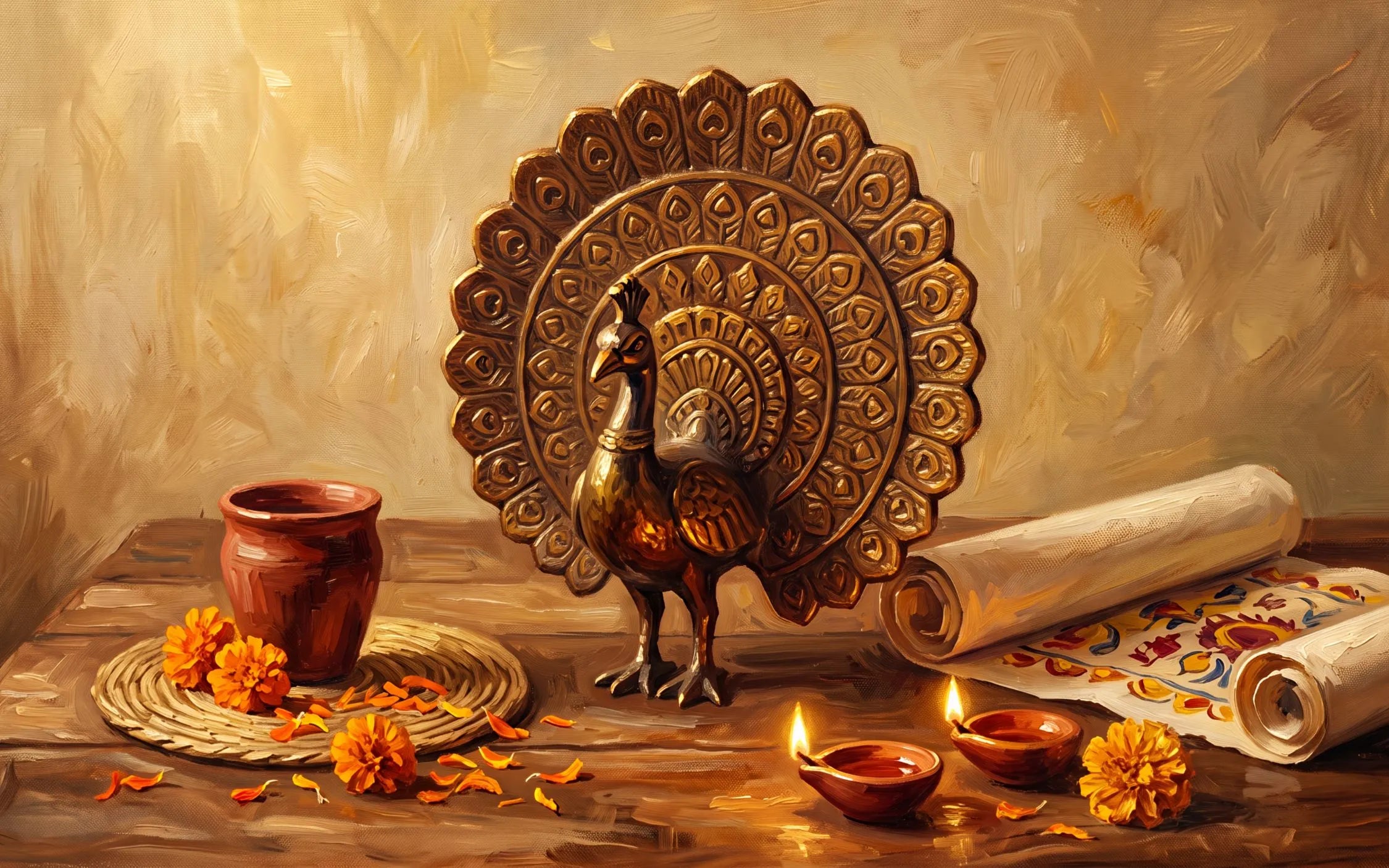
For surfaces rather than walls, Dhokra brass craft figurines are among the most considered home gifts available. A Dhokra peacock or elephant on a shelf carries over 4,000 years of lost-wax casting tradition. The mould is broken after every single casting, which means no two pieces are identical. The person receiving it holds something that exists nowhere else in exactly the same form.
Lacquer craft wall hangings bring colour and folk energy to a room. The vibrant reds, greens, and blacks of the traditional lacquer palette are warm and celebratory in the Diwali context, and unlike festival decorations that come down after Lakshmi Puja, a lacquer wall hanging stays up and gets better over time.
For lighting, a handcrafted lamp changes the quality of a room's evening more than any other single object. A bamboo hanging lamp or a fish-style applique cotton lamp from Pipili's Chandua tradition illuminates differently from a manufactured pendant. The natural material diffuses the light. The room becomes warmer. That effect is immediate and lasting. Every evening when the recipient switches it on, there is a residual connection to the choice that was made.
Explore the full home gifting collection and the living room decor collection for the complete range.
For the Art Collector in the Making
There is a growing number of Indian women and men who have started collecting Indian folk art. Not in the formal gallery sense, but in the sense of choosing one piece at a time, over years, that carries meaning and craft value together.
A Palm Leaf Painting is a natural entry point into this world. The monochrome quality of palm leaf engraving, fine lines etched into natural leaf using iron stylus and natural ink, is compact and understated. A palm leaf Lord Jagannath or Goddess Saraswati piece given this Diwali could be the first piece in a collection that grows across a lifetime.
For someone who already collects, a larger Pattachitra canvas is a meaningful step in scale and investment. The Pattachitra painting collection covers a wide range, from intimate pieces suited to a bedroom or study to larger narrative works.
For the New Home
Diwali falls close to housewarming season in India. The winter months are when families settle into new flats, new houses, new cities. A Diwali gift for a couple or family moving into a new home carries the added weight of a housewarming gift.
For the kitchen and dining table, handcrafted objects bring warmth that no manufactured alternative provides. A set of terracotta cups from Taalapatra's kitchen and dining collection feels different in the hand from ceramic or steel. The natural clay holds heat differently. The texture is earthen and specific. And handwoven Sabai golden grass coasters and table mats on the dining table are the kind of detail that new homeowners rarely buy for themselves but appreciate every time they sit down to a meal.
For the bedroom, handwoven cotton bedding, bed covers woven on traditional handlooms, carries a quality that synthetic bedding does not. The breathability of handloom cotton, the slight irregularity of the weave, the weight and texture of a textile that was made rather than manufactured: all of this translates into a different experience of everyday rest.
For the One Who Wears Their Heritage
Diwali is the festival when wearing Indian is not a cultural statement but the natural default. A Sambalpuri saree gifted this Diwali for a woman who loves handloom is a gift that will be worn on this Diwali and every significant occasion thereafter. The ikat patterns, the natural colours, the weight of handwoven silk or cotton: these do not go out of style because they were never in style to begin with. They were always simply beautiful.
For the man in the family who appreciates Indian textiles, a Sambalpuri handwoven shirt is one of the most considered gifts in this catalogue. It is the kind of garment he would not have bought for himself but will reach for every time an occasion calls for something that is both contemporary in cut and entirely rooted in craft tradition.
For women who prefer unstitched dress material, the Sambalpuri dress material collection offers handwoven fabric that can be tailored to personal preference.
The Gift That Works for Every Relationship
Not every Diwali gift needs to be significant in scale. The smallest handcrafted objects carry as much care as the largest.
A Shell craft Sankha, a hand-painted conch decorated with Pattachitra motifs or tribal art, is an auspicious choice for a Diwali gift at any price point. In Indian tradition, the conch has deep sacred resonance. As a gift, it carries both that resonance and the artisan's hand that painted it.
A set of hand-painted wooden coasters brings everyday craft into the most used surface in any home. A Sabai grass bread basket, woven from golden paddy straw by artisans in Odisha, is functional, beautiful, and made entirely from natural materials with no synthetic component.
Stone craft and terracotta craft pieces, from Odisha's deep traditions of earthen and stone carving, are gifts that carry the weight of the material itself: cool, specific, unrepeatable. Paper Mache Ganesha figurines are particularly appropriate for Diwali, given Ganesha's auspicious presence at the threshold of new beginnings, which is what the festival's new year association represents.
Explore the full crafts collection for the complete range across every material and every price point, or explore the collection by categories.
Before You Order: A Note on Timing
Diwali 2026 falls on Sunday, 8 November. Dhanteras, the first day of gifting, is on Friday, 6 November. Handcrafted pieces are not warehouse stock. They are made by artisan families and ship with care. Ordering in September gives the best lead time for delivery and for any specific requests.
Taalapatra's gifting collection is the starting point if you are looking for the full range of what is available for this Diwali. Every piece is sourced directly from artisan families across India, with no intermediaries. The price you pay goes, in large part, to the person who made it.
FAQs
What are the best Diwali gift ideas for family in India?
Handcrafted objects that carry cultural meaning and last beyond the festival make the most considered family Diwali gifts. A Pattachitra painting for the home, a Dhokra brass figurine, a set of terracotta cups, handwoven bedding, or a Sambalpuri saree are all gifts that go into the home or wardrobe and remain there. Unlike generic hampers, these carry the story of a specific artisan tradition and get better with time.
What are unique Diwali gift ideas for someone who has everything?
The most unique Diwali gifts are those that cannot be replicated or mass-produced. Every Dhokra brass piece is unique because the mould breaks after each casting. Every Pattachitra painting is an original because no Chitrakar can reproduce the exact weight of a line or the specific colour mix from that day. A piece from Taalapatra's Pattachitra collection, Dhokra craft, or Horn Craft collection offers exactly this: a singular, unrepeatable object that no one else will receive.
What are eco-friendly Diwali gifts India?
Handcrafted gifts made from natural materials are among the most eco-conscious Diwali choices available. Sabai grass baskets, terracotta cups, bamboo craft, palm leaf art, stone craft, and paper mache pieces are all made from materials drawn from the natural world with no synthetic components. These are not just eco-friendly in their making. They are objects intended to last decades rather than be discarded, which is the most sustainable quality any gift can have. Explore Taalapatra's bio crafts collection for the full range.
What makes a handmade Diwali gift different from a hamper?
A handmade gift carries three things a hamper does not: the mark of a human hand, the story of a specific tradition, and the likelihood of lasting. The sweets in a hamper are consumed and forgotten. A Pattachitra painting or a Dhokra figurine goes on a shelf where it is seen every day for years. The recipient knows it was chosen because of what it is, not because it was available in bulk. That specificity is what makes it a gift rather than a transaction.
Does Taalapatra offer Diwali gifting options online?
Yes. Taalapatra's gifting collection covers a wide range of handcrafted pieces sourced directly from artisan families across India, across every material and every price point. The home gifting collection covers decor, dining, and living objects. The paintings collection covers framed and unframed art pieces. Every piece ships pan-India and internationally. For specific gifting requirements or bulk enquiries, write to care@taalapatra.com.
What Diwali gifts are appropriate for a new home or housewarming?
Gifts that go into the home and stay there are the most considered choice for a housewarming Diwali. A Pattachitra painting for the living room wall, a Dhokra figurine for a shelf, handwoven cotton bedding, terracotta cups and golden grass table mats for the kitchen, or a handcrafted lamp for the bedroom: all of these are gifts that mark the home's beginning and remain in it. Taalapatra's living room decor, bedroom essentials, and kitchen and dining collections are the natural starting points.
What is the Taalapatra Diwali gift philosophy?
Every piece at Taalapatra is sourced directly from the artisan family that made it, with no middlemen in the chain. When you give a Taalapatra gift this Diwali, the price you pay goes in large part to the weaver, the painter, the brass caster, or the potter who created it. The gift reaches your recipient carrying that meaning as well as its own craft and beauty. In a festival whose deepest tradition is about light and goodwill, a gift that directly supports a family's livelihood is one of the most consistent expressions of that tradition available.
The content in this blog is based on the author's research and understanding at the time of writing. While every effort has been made to ensure accuracy, information may vary and evolve over time. Taalapatra welcomes feedback and corrections. If you spot an inaccuracy, write to us at care@taalapatra.com.